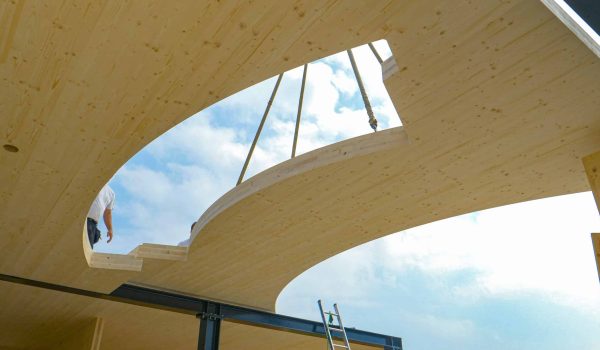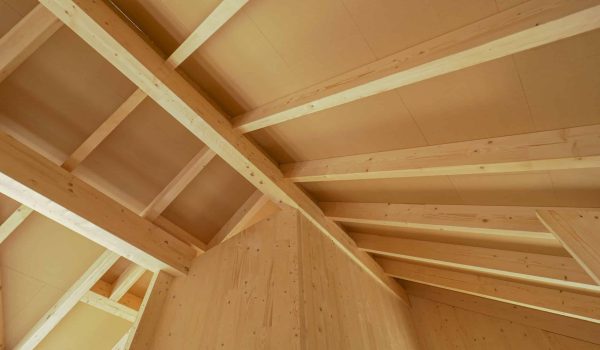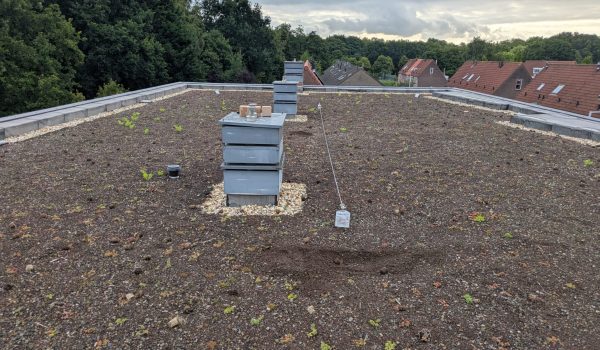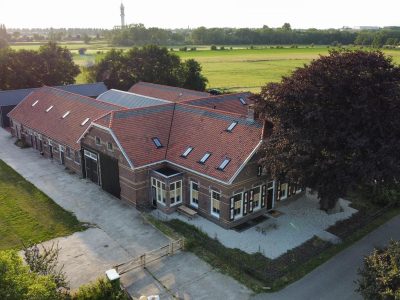
Facades during construction
Facades during the construction phase: understanding moisture, protection, and risks
During the construction phase, facades are highly exposed to rain, construction moisture, and fluctuating temperatures. At the same time, they are not yet airtight, not fully finished, and dependent on temporary protection. Inscio monitors moisture and temperature in facade constructions so that construction teams know exactly where risks arise—before finishing or insulation is completed.
Why facades are vulnerable during the construction phase
A facade is only truly protected when the entire shell has been sealed and finished. Until then, facades are susceptible to:
- rainwater penetration and leakage through open joints, cracks, or connections
- construction moisture trapped in insulation or structural layers
- time pressure, resulting in insulation or finishing being installed too early
- incomplete airtightness, allowing warm, moist air to condense
- temporary protection that is not waterproof or insufficiently secured
Without monitoring, moisture problems can accumulate behind layers and details, invisible until damage occurs.
What does Inscio measure?
What Inscio measures in facades during the construction phase
Moisture in insulation and structural layers
- insight into moisture absorption during rain
- effect of temporary sealing and films
- detection of areas that are not drying sufficiently
Temperature and relative humidity
- dew point calculations to detect condensation
- relationship between indoor and outdoor temperature
- understanding the risk of internal fluid accumulation
Inscio reveals what is normally only noticed at a late stage.
Typical risks in facades during construction
Inscio sees the same patterns recurring in projects:
- Rain entering the structure through temporary openings
- Insulation that is sealed too early, trapping construction moisture
- Condensation behind insulation due to indoor heat escaping through gaps
- Wet areas on the inside of facade sections due to prolonged exposure to rain
- Delayed drying due to thermal bridges and cool facade sections
- Wood or biobased insulation that retains moisture when the building climate is not controlled
These risks cause mold, reduced insulation value, wood damage, or warranty disputes if they are not detected in time.
- Inscio transforms moisture management from ad hoc inspections to continuous risk management
How Inscio helps you during construction
Real-time insight
Measure continuously, without relying on inspections or snapshots.
Automatic signaling
Software recognizes abnormal humidity and temperature trends and reports them immediately.
Preventing moisture entrapment
Make informed decisions about when insulation, membranes, or siding can be installed.
Check protection
Data shows whether temporary sealing is sufficient or needs to be adjusted.
Digital file
Transparency about the condition of the facade before completion, supported by data.