
Testing, measuring, and calibrating
After an intensive process of testing, measuring, and calibrating, this measurement solution is ready for practical use. The sensors are specifically tailored to sand cement and continuously provide reliable data on the mass moisture percentage (%) during the drying process. This gives you immediate control over quality, planning, and progress—based on facts rather than assumptions.
Continuous insight into the drying process
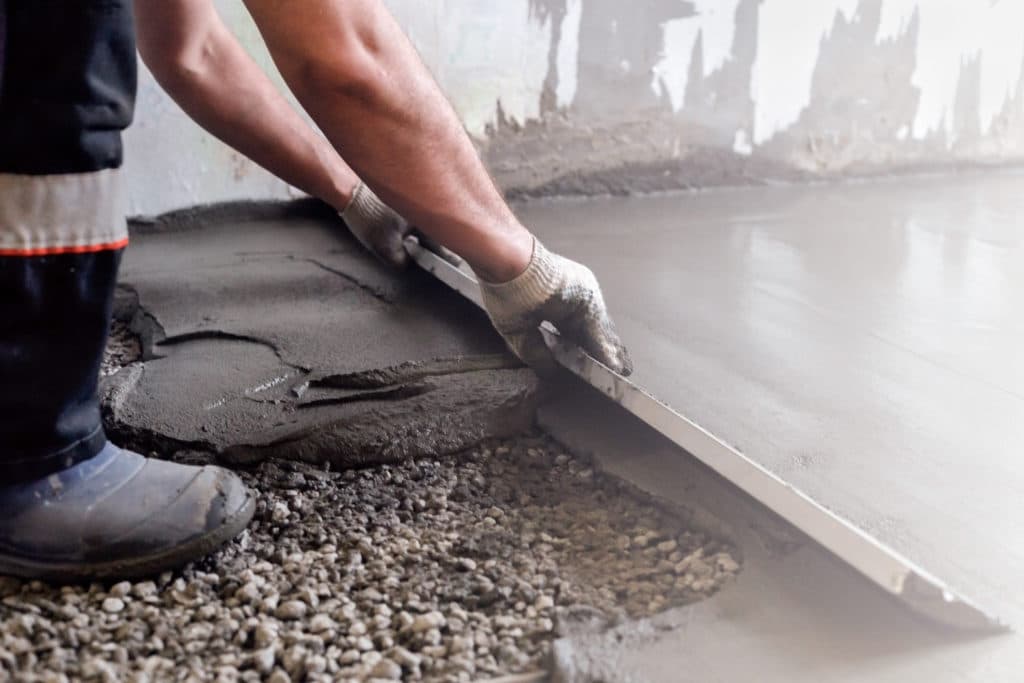
In construction and renovation projects, drying sand cement plays a crucial role in the planning and quality of the end result. Traditionally, moisture content is often measured manually or destructively, which takes time and does not always provide a complete picture. Sensors in sand cement fundamentally improve this process: continuously, accurately, and without damaging the material.
Easy installation, non-destructive measurement
The sensors are simply inserted into the sand cement, either during application or at a later stage. They measure the mass moisture percentage (%) to a depth of approximately 7 cm in the layer, providing a representative picture of the actual moisture content in the material. The measurement is completely non-destructive, leaving the sand cement intact and allowing repeated measurements without additional work or repair.
Real-time monitoring and automatic alerts
Customers can monitor moisture content developments remotely and in real time via an online dashboard. The system automatically flags when set limits are reached or when the drying process deviates from expectations. This means that drying times are no longer guessed at, but controlled based on current data.
Shorter lead times and less risk
Data-driven insights demonstrably shorten project lead times. Waiting times are minimized, unnecessary delays disappear, and schedules become more reliable. At the same time, the risk of premature completion—with potential damage, adhesion problems, or loss of quality—is significantly reduced.

Sustainable, reusable, and efficient
The sensors are durable and will last for years. Once a project is complete, they can be easily removed and reused in the next project. No destructive drilling or sampling is required, which reduces labor, repair costs, and disruption to the construction process. The result is a more efficient process with greater control over quality, progress, and costs.