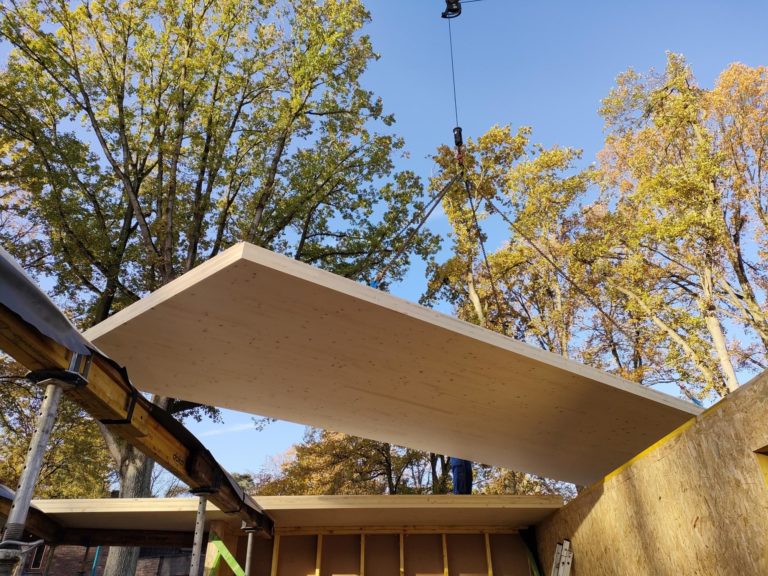

ERA Contour is constructing the first wooden residential complex in Rotterdam that is over 50 meters high. This building consists mainly of CLT (cross-laminated timber) and minimal use of concrete. Because ERA Contour provides a warranty on the wooden structure, additional monitoring has been implemented, and sensors have been added at strategic locations to continuously measure and report moisture levels. Here, senior quality & service advisor Nico Utberg and project organizer Taco Valstar from ERA Contour share their experiences with wood monitoring.
SAWA in Rotterdam
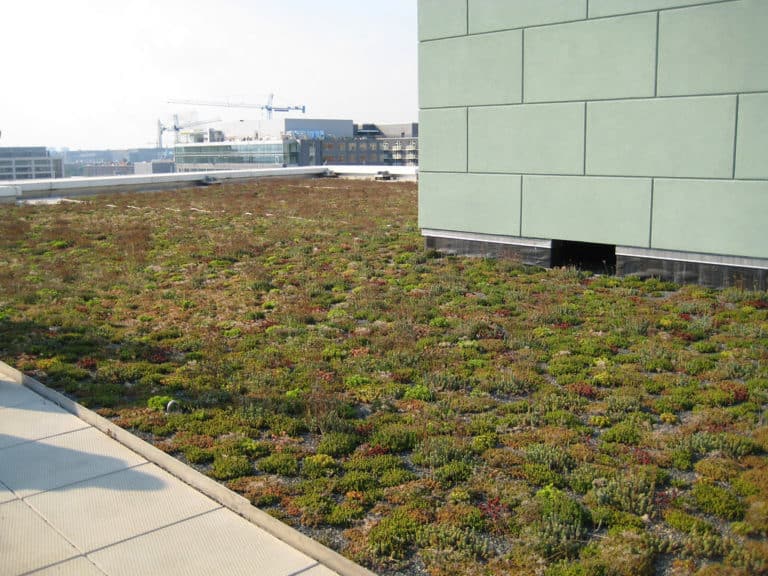
On the Lloyd Pier on the Nieuwe Maas in Rotterdam stands a wooden building over 50 meters high, with 39 owner-occupied homes, 50 mid-range rental homes, 20 private sector rental homes, a catering facility, and a social facility. This building stands out both for its use of CLT and its spacious green terraces, which contribute to greater biodiversity in the neighborhood. Wood (CLT) is a more sustainable alternative to traditional building materials such as concrete, steel, and stone, but its long-term behavior has been less researched. SAWA is a joint development by ERA Contour and Nice Developers. "The MJOP advisory report states that the building must be inspected for damage and moisture," says Nico. "In order to monitor moisture development on a regular basis, we went in search of smart moisture meters."
"Thanks to Inscio's sensors, we can clearly see how much moisture the wood is exposed to during the construction period." Taco Valstar
Sustainable and healthy
The CLT wood used to construct SAWA is more sustainable than concrete, steel, and stone, as trees store CO2 during their growth. In addition, wood is lighter in weight and enables prefabricated construction, which makes the building process easier to optimize. SAWA's supporting structure consists of wooden columns and beams connecting the columns, on top of which a wooden floor has been installed. These columns, beams, and ceilings are visible in the homes. Building with wood also creates a pleasant and healthy living environment. "In addition to regularly monitoring moisture development in this building, we also want to learn from it for future projects," Nico continues. "A colleague of ours came across Inscio's sensors while searching for a solution," adds Taco.
Moisture monitoring at tactical locations
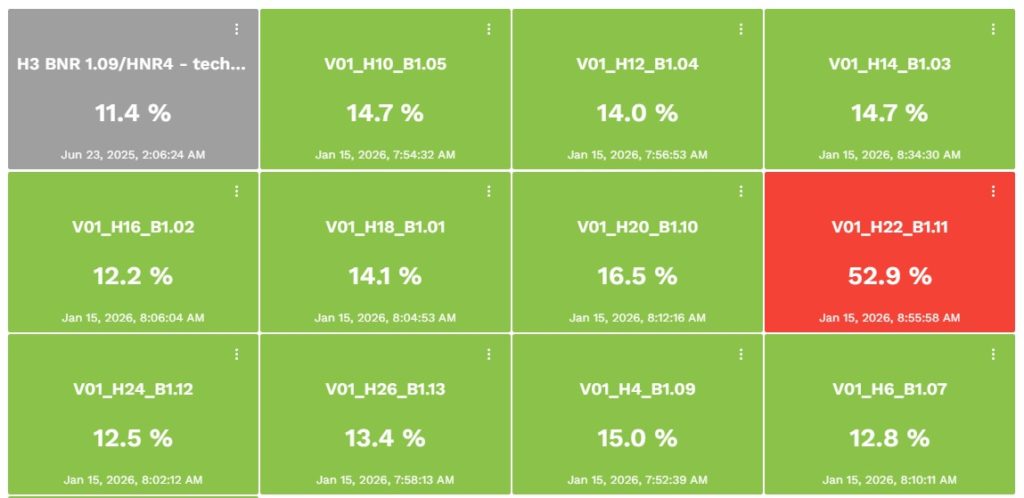
"We have installed Inscio sensors in high-risk areas to automatically monitor moisture development," explains Taco. "For example, behind the paneling near the beams under the flood barriers at the gallery supports and balcony supports. But also in every apartment, in the floor, near the bathroom in the utility room. In total, around two hundred sensors have been installed throughout the building in the roofs, facades, terraces, and apartments. They teach us a lot about the moisture content in the wood during the building's use phase. In addition, the sensors automatically alert us if a moisture problem arises somewhere and provide insight into how the wooden structural elements dry out after a leak has been repaired. This insight is not only valuable to us as a project developer and builder, but also to all residents and the Homeowners' Association (VvE). Living in a largely wooden high-rise building is a new experience for everyone."
“We pushed the snow aside and saw the problem. We would never have found it without Inscio.” Nico Utberg
Understanding moisture influences during construction
"Inscio's sensors allow us to see exactly how much moisture the wood is exposed to during the construction period," says Taco. "We have spared no expense or effort to manage the water balance during the construction process as effectively as possible." Alongside fire, this is wood's greatest enemy during the construction phase. "You enclose wood that is still damp, which then has to dry naturally," adds Nico. "We have seen a very clear difference in the drying of enclosed and unenclosed wood. But also the influence of condensation during cold nights, where you think you have a leak after the first notification, when in fact it turns out not to be the case. However, the moisture sensors have also already detected two real leaks that would otherwise only become visible much later, with potentially costly damage. We were able to seal these leaks immediately after detecting them."
Warranty and maintenance dates
Nico Utberg and Taco Valstar are both enthusiastic about the added value of the data and insights provided by Inscio's sensors and are in favor of using them more often. The application always remains a cost/benefit consideration between automatic continuous monitoring and periodic visual human inspections and/or traditional moisture measurement. Human inspections require not only the calculation of hours, but also tools such as ladders and safety equipment. Furthermore, the complexity of the building is another reason to use sensors for remote monitoring. At SAWA, the homeowners' association also sees the added value of all the data and insights that the sensors will provide in the coming decades for warranty and maintenance purposes. ERA Contour will continue to manage and monitor the sensor solution for the first five years. During that period, the homeowners' association can view the management dashboard and then take over management itself.